Ireland360
The best day trips from Dublin are Glendalough and the Wicklow Mountains for scenery, Newgrange and the Boyne Valley for history, and Howth for a coastal walk with seafood at the end. If you have a longer day and don’t mind time on a coach, the Giant’s Causeway and the Cliffs of Moher are both doable, but they’re big days.
Half-day trips: the Dublin coast
Howth
Howth is a fishing village on a headland at the northern end of Dublin Bay, and it’s the easiest escape from the city. Take the DART (the coastal commuter train) to the end of the line, walk the pier, then tackle the cliff path around the head. There are loops of different lengths, all with big sea views and, on clear days, the Wicklow Mountains across the bay.
You can do it independently in a morning, or join a half-day guided coastal tour to Howth that adds the stories and the best viewpoints. Finish with fish and chips on the pier.
Malahide
One stop over on the northern line, Malahide is a seaside town with a castle and parkland at its centre. Malahide Castle was home to the Talbot family for centuries and sits in large parkland and gardens. It pairs well with Howth if you’re keen: both are on the DART and Northern Commuter lines, though you’ll need to change trains.
Dalkey and the south coast
Heading south on the DART, Dalkey and Killiney give you villa-lined hills, Sorrento Terrace and the view over Killiney Bay that people like to compare to the Bay of Naples. It makes an easy afternoon, and you can add a swim at the Forty Foot in Sandycove if you don’t mind cold water.
Full-day trips: mountains and history
Glendalough and the Wicklow Mountains
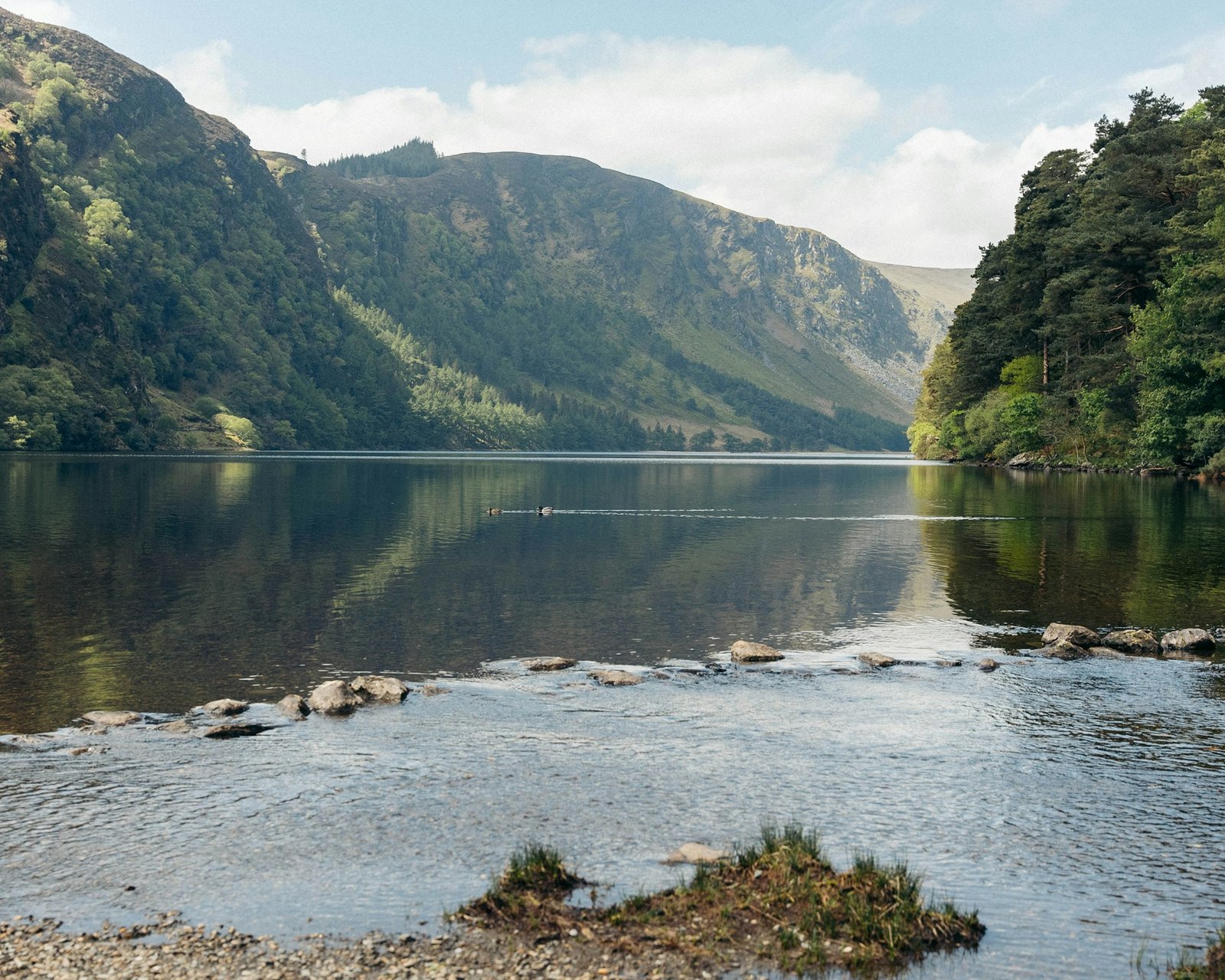
Glendalough is a sixth-century monastic settlement founded by St Kevin, set in a glacial valley between two lakes. The Glendalough monastic site has a round tower, churches and a graveyard, and walking trails lead up from the Upper Lake into the hills.
Public transport to Glendalough is limited, so most visitors either drive or take a tour. If you only do one day trip from Dublin, we’d pick this one. The Wild Wicklow Mountains and Glendalough tour is one of the highest-rated day trips from the city, with time in the mountains as well as at the monastic site. On the drive back, Johnnie Fox’s in Glencullen is an old mountain pub that does a good late lunch. Our Wicklow guide has more on the county.
Powerscourt and Enniskerry
Closer to the city, Powerscourt Estate outside the village of Enniskerry has formal Italian and Japanese gardens laid out below a Palladian house, with the Sugar Loaf mountain behind. A few kilometres away on the same estate, Powerscourt Waterfall is the highest waterfall in Ireland, and the meadow at its foot is a good spot for a picnic. You can reach Enniskerry by bus from the city, or see it on the Wicklow, Glendalough and Powerscourt day tour, which adds the monastic site in the same day.
Newgrange and the Boyne Valley
North of Dublin, the Boyne Valley holds some of the oldest monuments in Europe. Newgrange is a passage tomb older than Stonehenge and the Egyptian pyramids, and its inner chamber is lit by the rising sun around the winter solstice.
You can only visit Newgrange and Knowth through the Brú na Bóinne Visitor Centre, which runs shuttle buses out to the tombs. Places are limited, so arrive early or go with a tour such as the Newgrange and Boyne Valley day tour. Combine it with the Hill of Tara, the ancient seat of the High Kings, which is a short drive away.
Kilkenny
Kilkenny is about an hour and a half by train or car, and it’s a good choice if you want a small city rather than countryside. Walk the Medieval Mile, see Kilkenny Castle and its grounds, then settle into one of the city’s many pubs. Some popular tours, like the Wicklow Mountains, Glendalough and Kilkenny tour, combine Kilkenny with a stop in Wicklow.
Long day trips
The Giant’s Causeway and Belfast
The Giant’s Causeway is roughly three hours from Dublin each way, so this is a long day, but the basalt columns draw visitors from all over the world. Most tours combine the Causeway’s basalt columns with Dunluce Castle, the Dark Hedges and a stop in Belfast. The Giant’s Causeway, Dark Hedges, Dunluce and Belfast tour is one of the most reviewed day trips in the country.
If you’d rather go independently, the Enterprise train runs between Dublin Connolly and Belfast, and you can join a Causeway tour from there.
The Cliffs of Moher
From Dublin, the Cliffs of Moher are on the other side of the country. A day tour such as the Cliffs of Moher, Burren and Galway day tour makes it possible, but expect something like ten to twelve hours door to door. If you’re heading west anyway, it’s far better to see the cliffs from Galway or Clare.
Doing it yourself
Most of these trips are possible without a tour if you’re happy to plan around timetables. Howth, Malahide, Dalkey and Bray are all on the DART. Kilkenny has direct trains from Heuston station, and Belfast has the Enterprise from Connolly. St Kevin’s Bus runs from the city to Glendalough, though not often, so check the return times before you go. Buses also serve the Brú na Bóinne Visitor Centre, but connections are limited and a tour or car is simpler.
If you hire a car for the day, avoid the morning and evening rush on the M50 ring road, and allow time to park at Glendalough, where the car parks fill early on summer weekends.
How to choose
- One day and no car: Howth by DART, or a Glendalough tour.
- Interested in history: Newgrange and the Hill of Tara.
- Want scenery and a decent walk: Glendalough, or the Howth cliff path.
- Travelling with kids: Malahide (castle, park and playground) or Howth.
- Have a spare long day: the Giant’s Causeway.
For a shortlist of the best guided options, see our pick of the best day tours from Dublin, and for lesser-known spots closer to the city, try our hidden gems within an hour of Dublin.
Good to know
- Use a Leap Card for DART, Luas and Dublin Bus. It’s cheaper than paying cash fares and saves fumbling for change.
- Book tours ahead in summer. The most popular day trips sell out, especially at weekends.
- Check what’s included. Some tours include entry to sites like Newgrange or Kilkenny Castle; many don’t. Read the details before you book.
- Dress for the hills. Glendalough and the Wicklow Mountains can be noticeably colder and wetter than the city.
- Start early. Coaches leave the city early in the morning. The first hour is usually the best light, and you’ll beat the crowds at the bigger sites.
FAQ
What is the easiest day trip from Dublin without a car?
Howth. The DART runs from the city centre to the village, and the cliff walk starts right from the harbour.
Can I visit Newgrange without a tour?
Yes. Drive or take a bus to the Brú na Bóinne Visitor Centre and book a place on the shuttle to the tombs. You can’t drive directly to Newgrange itself.
Is the Giant’s Causeway too far for a day trip from Dublin?
It’s a long day, but very doable on an organised tour. If you have the time, staying a night in Belfast or on the Causeway Coast makes for a more relaxed trip.
How many day trips should I plan from Dublin?
With four or five days in the city, two day trips is a good balance: one for scenery, like Glendalough, and one for history, like Newgrange. Leave at least two full days for the city itself.
Which day trip is best in bad weather?
Newgrange and Malahide Castle both have indoor elements, and Kilkenny has plenty of museums, cafés and pubs to duck into.